For many Mercedes-AMG owners, the driving experience is about more than acceleration. There’s the engine response, the exhaust note when the revs climb, and that unmistakable feeling of driving something developed with performance in mind. It’s no surprise that exhaust modifications remain popular among enthusiasts who want to personalise their cars.
Downpipes are one of the components often discussed when planning an upgrade. They connect the turbocharger to the rest of the exhaust system and can influence exhaust flow and sound. However, choosing the right setup for a C63 W205, A45 S, or AMG GT GTR / GTS requires careful research. These cars have different engines and exhaust layouts, so a component that works on one model won’t necessarily suit another.
A good upgrade starts with understanding the vehicle, the available options, and the practical consequences of changing factory exhaust components.
What Do Downpipes Actually Change?
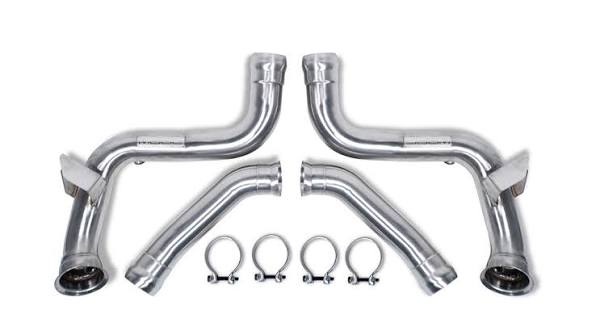
A downpipe carries exhaust gases away from the turbocharger and towards the remaining exhaust system. Its design, diameter, bends, and internal components can influence how gases move through the exhaust.
Factory downpipes are developed to meet several requirements at once. Manufacturers consider performance, emissions, noise regulations, durability, and everyday comfort. Aftermarket alternatives may use different pipe dimensions, materials, or catalytic converter arrangements.
These changes can affect the sound and behaviour of the exhaust system, but results depend on the complete vehicle configuration. Turbocharger characteristics, engine calibration, the rest of the exhaust, and supporting modifications all play a role. A larger pipe doesn’t automatically mean a faster car, and impressive product descriptions shouldn’t replace technical evidence.
Mercedes-AMG C63 W205: Understanding Catted and Catless Options
The Mercedes-AMG C63 W205 has a distinctive character, combining a powerful V8 engine with the comfort and practicality of a performance-oriented Mercedes. Many owners appreciate its factory exhaust sound, while others explore modifications to give the car a more individual personality.
When comparing mercedes c63 w205 catted and catless downpipes , it’s important to understand the difference between the two configurations.
Catted downpipes retain catalytic converter elements, although aftermarket designs may use different specifications from the original factory components. Catless versions remove catalytic elements from the modified section. This changes the vehicle’s emissions-control arrangement and can have consequences beyond exhaust sound.
Catalytic converters help reduce harmful pollutants. Removing required emissions equipment may make a vehicle illegal for public-road use, cause it to fail an inspection, and trigger diagnostic warnings. An aftermarket catted component isn’t automatically road legal either; its certification and compliance with local regulations need to be checked.
For many owners, the decision should begin with the vehicle’s intended use. A road-going C63 has different requirements from a dedicated track vehicle. It’s worth checking regulations before buying rather than discovering a problem after installation.
Mercedes-AMG A45 S: A Compact Car with Serious Performance
The A45 S demonstrates how much performance can be developed from a compact Mercedes-AMG platform. Its turbocharged engine and responsive character make it appealing to drivers who enjoy a car that feels energetic in everyday conditions as well as on a spirited drive.
Interest in a mercedes a45s decat downpipe often comes from owners researching exhaust modifications and a more pronounced engine note. However, the word “decat” deserves attention. A decat configuration removes catalytic converter equipment from the relevant exhaust section, which can affect emissions compliance and road legality.
Before considering any downpipe for the A45 S, confirm the exact generation, model year, engine specification, and exhaust layout. Don’t assume that a component designed for another A-Class or AMG model will fit. Differences in connections, sensor positions, and mounting arrangements can cause installation problems.
The A45 S also relies on sophisticated engine management. Changes to the exhaust can affect sensor readings and diagnostic behaviour. Any technical assessment or calibration should be handled by a qualified specialist, without disabling legally required emissions monitoring.
Sound expectations matter too. A louder exhaust may seem appealing during a short demonstration, but daily driving is a different story. Consider whether the final setup will remain comfortable during commuting and longer journeys.
Mercedes-AMG GT GTR and GTS: A Different Kind of Exhaust Upgrade
The Mercedes-AMG GT GTR and GTS are designed around a more focused sports-car experience. Their proportions, driving position, and performance-oriented engineering give them a different personality from the C63 and A45 S.
Owners researching mercedes amg gt gtr gts downpipes should pay particular attention to model-specific fitment. The GTR and GTS may share aspects of their platform, but that doesn’t mean every exhaust component is interchangeable. Model year, engine specification, and existing exhaust configuration should all be verified.
A well-designed downpipe should have accurate flanges, suitable pipe dimensions, consistent welds, and mounting points that match the vehicle. Stainless steel is commonly used in performance exhaust manufacturing because it offers useful strength and resistance to corrosion and high temperatures. Still, the quality of the actual fabrication matters just as much as the material name.
Owners should also consider how the downpipes interact with the rest of the exhaust. The final sound comes from the complete system, including resonators and silencers. Choosing one component without considering the others can produce a result that’s louder than expected or uncomfortable at cruising speeds.
Materials and Construction: Don’t Overlook the Basics
Downpipes work in a demanding environment. They experience high exhaust temperatures, vibration, and repeated heating and cooling cycles. Poor construction can eventually contribute to leaks, loose connections, or premature wear.
Before purchasing, look for clear specifications covering:
- Material grade: Understand what type of stainless steel or other material is used.
- Pipe thickness: Check whether the manufacturer provides meaningful construction details.
- Weld quality: Consistent, properly finished welds are important for durability.
- Flange accuracy: Correct connections help prevent fitment issues and exhaust leaks.
- Heat management: Suitable clearance and heat protection help safeguard nearby components.
- Included hardware: Confirm whether gaskets, clamps, and mounting parts are supplied.
A reliable manufacturer should be able to answer practical questions about these details. If the only information available is a photograph and a broad performance claim, ask for more documentation.
Professional Installation and Vehicle Checks
Modern Mercedes-AMG vehicles use advanced electronics to monitor engine performance and emissions. Modifying exhaust components may influence sensor readings, diagnostic behaviour, and calibration requirements.
Professional installation is strongly recommended. A workshop familiar with the specific AMG platform should check connections, fasteners, gaskets, sensor positions, exhaust alignment, and clearance around nearby components.
After installation, the system should be inspected for leaks, unusual vibration, warning lights, and unexpected noises. Any calibration work should be performed by a qualified specialist who understands the engine and prioritises mechanical safety.
Avoid software modifications intended to conceal emissions faults or disable required monitoring systems. Apart from legal concerns, ignoring a genuine warning can lead to more expensive problems later.
Making a Sensible Buying Decision
Before ordering, confirm the exact model and year, ask about fitment, review warranty conditions, and check whether the product is suitable for the vehicle’s intended use. Compare technical specifications rather than relying entirely on advertised horsepower or sound demonstrations.
It’s also useful to speak with an experienced installer before purchasing. A specialist can explain whether additional hardware or supporting work may be needed and help identify potential compatibility concerns.
An Upgrade Should Improve the Ownership Experience
The C63 W205, A45 S, and AMG GT GTR / GTS each offer a different interpretation of Mercedes-AMG performance. Their downpipe requirements shouldn’t be treated as identical. The right choice depends on the vehicle’s engineering, the owner’s expectations, and the regulations that apply where the car is driven.
Take your time, choose well-made components, and make professional installation part of the plan. A successful exhaust upgrade isn’t simply about making more noise. It’s about finding a setup that complements the car, works reliably, and remains enjoyable long after the excitement of the first drive has passed.